
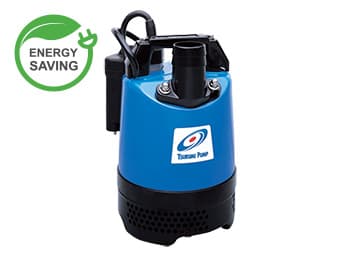
TSURUMI Automatic Portable Dewatering Pump LB-800A (50mm, 0.75kW, Single-phase, Electrode Auto-operation)
Irrigation & Watering
$3,420.00/ 件
$4,890.00
No downloads available yet
Contact the supplier if you need a datasheet, certificate, or another technical document.
Irrigation & Watering
$4,890.00
Irrigation & Watering
$4,060.00
Irrigation & Watering
$4,060.00
Submersible Pumps
$3,640.00
Submersible Pumps
$4,060.00
Irrigation & Watering
$3,640.00
$3,420.00/ 件-30%
Was $4,890.00Save $1,470.00

 FPSFlexible PaymentBank Transfer
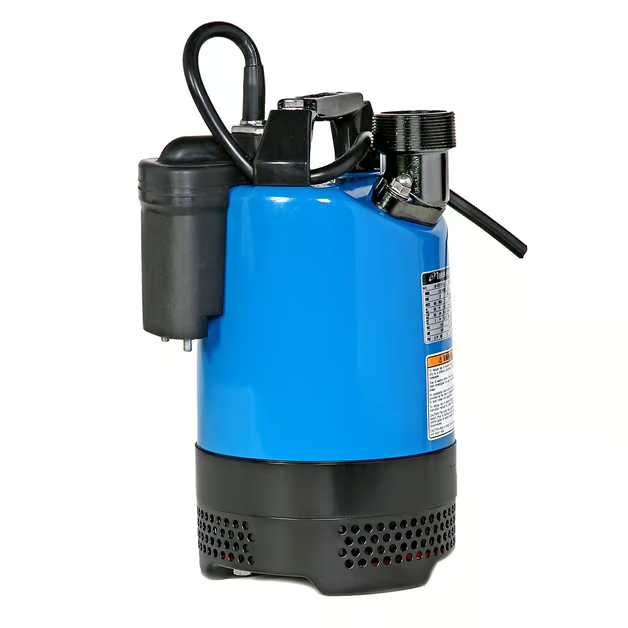
The TSURUMI LB-800A (110V) is the single-phase 110V version of Tsurumi's LB-A series Portable Dewatering Pump (Automatic Operation type). It has a 50 mm (2-inch) discharge and a 0.75 kW 2-pole single-phase submersible motor. A built-in electrode-type level relay unit runs the pump while the probe is submerged, stops it about one minute after the water drops below the probe, and restarts it when the water reaches the probe again. The slim body fits inside an 8-inch pipe or well casing, and the pump is built for site water, seepage and rain water carrying a small amount of sand and silt.
This listing is the single-phase 110V build, suited to the 110V supply commonly used on Hong Kong construction sites. The 110V and 220V builds are different units and are not interchangeable. Check the voltage and frequency on the nameplate before use and make sure they match the supply (voltage within ±10% of the rated value).
Selection note: the LB-800A is a dewatering pump, not a sewage or slurry pump. It is for water, or water with a little sand and silt, and passes solids up to 6 mm, so it is not suitable for sewage with fibrous solids, septic tanks, sewage pits or slurry. It is controlled by electrodes and has no float switch. If you do not need automatic operation, choose the standard LB-800. If your site supply is not 110V, choose the non-110V LB-800A (voltage as per nameplate).
At 50 Hz, the 15.0 m maximum head is the head at near-zero flow, and the 0.31 m³/min (310 L/min, about 18.6 m³/h) maximum capacity is the end point of the performance curve. The two do not occur together: actual flow falls as total head (static head plus hose friction loss) rises, so select the pump from the performance curve using your site's total head. The 18.0 m maximum head quoted for 60 Hz builds does not apply on a 50 Hz supply. The LB-800A has the same pump performance as the standard LB-800. For a lighter pump at lower head, consider the LB-480A 110V (11.0 m maximum head).
| Item | Specification |
|---|---|
| General | |
| Model | LB-800A (single-phase 110V build) |
| Series | LB-A (Portable Dewatering Pump, Automatic Operation type) |
| Discharge bore | 50 mm (2 in); 80 mm available on special request |
| Discharge connection | Hose coupling (standard, vertical or inclined); male threaded pipe coupling on special request |
| Hydraulic performance | |
| Max. head (at zero flow) | 15.0 m (50 Hz) / 18.0 m (60 Hz) |
| Max. capacity (curve end point) | 0.31 m³/min (310 L/min / 18.6 m³/h) |
| Solids passage | 6 mm |
| Electrical | |
| Motor output | 0.75 kW |
| Motor | 2-pole single-phase dry-type induction motor, continuous-duty rated, insulation class E |
| Synchronous speed | 3,000 min⁻¹ (50 Hz) / 3,600 min⁻¹ (60 Hz) |
| Power supply | Single-phase 110V (frequency as per nameplate) |
| Voltage tolerance | ±10% of the nameplate rated voltage |
| Starting method | Capacitor run |
| Motor protection | Built-in circle thermal protector (CTP), auto-reset |
| Cable | PVC, 5 m (Tsurumi global catalogue; lengths vary by regional build, check the unit supplied) |
| Automatic operation | |
| Control | Electrode-type level relay unit (no float switch) |
| Starting water level | 170 mm (can be lowered with optional extension probes) |
| Stop | About 1 minute after the water falls below the probe |
| Seals and bearings | |
| Shaft seal | Dual inside mechanical seals, silicon carbide (SiC) faces, oil-lubricated, with Oil Lifter |
| V-ring | Nitrile butadiene rubber (NBR) |
| Lubricant | Turbine oil ISO VG32, 155 ml |
| Bearings | Shielded ball bearings |
| Materials | |
| Impeller | Semi-vortex, urethane rubber |
| Pump casing | Synthetic rubber |
| Shaft | 403 stainless steel |
| Liquid limits | |
| Liquid | Water (may contain a little sand and silt), such as site water, seepage and rain water |
| Liquid temperature | 0–40 °C |
| pH | 5–9 |
| Max. dry matter | 10% |
| Max. use pressure | 0.2 MPa (about 20 m, submergence plus discharge pressure) |
| Dimensions and weight | |
| Dry weight (excl. cable) | 13.7 kg |
| Height | 341 mm |
| Outer diameter (incl. level relay unit) | 223 mm |
| Pipe / well casing fit | 8 in or larger |
Sources: Tsurumi Single-phase Portable Pumps catalogue (IB101), Tsurumi LB series operation manual, tsurumi.com.hk and Tsurumi Europe LB series data. Tsurumi advises obtaining the delivery specification sheet before use, as published specifications may change. Voltage, frequency, cable length and rated current of the supplied unit are as per the nameplate.
| Model | Operation | Power | Max. head | Max. capacity | Dry weight | Start / continuous running level |
|---|---|---|---|---|---|---|
| LB-800A 110V (this product) / LB-800A | Automatic (electrode) | 0.75 kW | 15.0 m | 310 L/min | 13.7 kg | Start 170 mm |
| LB-800 | Standard (manual) | 0.75 kW | 15.0 m | 310 L/min | 13.1 kg | Continuous 50 mm |
| LB-480A / LB-480A 110V | Automatic (electrode) | 0.48 kW | 11.0 m | 220 L/min | 11 kg | Start 115 mm |
| LB-480 / LB-480 110V | Standard (manual) | 0.48 kW | 11.0 m | 220 L/min | 10.4 kg | Continuous 50 mm |